
Week of October 11 – October 17, 2026
Decision Models Became Plumbing, and x402 Got Measured
I spent this week in Stockholm at the Nordic APIs Platform Summit, where I closed the event on Wednesday with a talk called The Agent Hype is at Odds with Your API Foundation. Before I went, I read the agenda and mapped all sixty-four talks against the keynote, and the agenda lined up with it.
Back home, the blog pull read 12,552 posts from 2,743 provider blogs this week, against 13,318 from 2,880 the week before — now that the wider set of sources has settled, a like-for-like week, a little quieter. From that pile three things stood out, and none of them was MCP on its own. Models that make decisions instead of writing text became something you route, govern and meter. The agent payment rail got measured by people who did not build it. And the remote MCP servers I have been watching move from experiment to general availability did exactly that.

Decision Models Became Plumbing
“Decision” showed up in 56 titles this week. Plenty of those are the ordinary word, but a striking share are the new category of models that return a yes or no, a pick from a list, or a score — with probabilities — instead of a paragraph. I wrote on Monday that decision models agreed on the questions, not the contract: eleven providers ask the same three kinds of question, and publish eleven different request shapes. The rest of the industry spent the week building the layer that hides that.
- LiteLLM now serves decision models from nine providers behind one request shape, at both
/v1/decisionsand/v1/systemone— the second being TypeSafe’s original path. When the proxy layer supports two competing paths for the same idea, the contract war is being settled in the middle rather than at the source. - AWS showed how to deploy decision models with llama.cpp on SageMaker, returning probabilities over declared options on CPU or GPU.
- The gateways moved in. Traefik published three ways to run the OpenAI Decisions API behind Traefik Hub — guard against jailbreaks, gate destructive MCP tool calls, meter spend per team — and Barndoor’s AI Gateway now governs decision models natively.
- And the models kept coming: TurinTech explained what decision models are while shipping smaller ones, Subquadratic’s claims twelve times Jev’s context window, and IBM’s Granite Switch 4.1 serves chat, decisions and speech from one endpoint.
What I find interesting is where the work is landing. A month ago these were model launches. This week they were gateway features, proxy routes and deployment guides — the same path MCP took, compressed into a few weeks. The decision is becoming an API call you govern, which means it needs a contract, and right now it has eleven.

x402 Got Measured
The agent payment rail had its first week of honest measurement, and the numbers point in two directions at once.
- The big one: Coinbase’s x402 recorded roughly 138.5 million transactions on Base by the end of the third quarter, per Chainalysis. That is not a demo.
- The sobering ones came from a single researcher doing the work. OnChain Agent Intel probed all 412 x402 endpoints advertised by 84 on-chain agents, then ran every live 402 response through three client parsers: only 17.5% parse under the frozen v1 client, 88.9% under the current one. And in a buyer-side field test, none of three payable agents completed a payment end-to-end with a stock v1 client, across three distinct failure classes.
- On the commerce side, the trust question arrived. Forter says automated fraud is already up twofold and agentic commerce has to be trusted before it can scale, and American Express wrote about intent intelligence — verifying that what an agent does matches what the person asked for.
I spent part of the week on the provider’s side of the same rail. Five MCP servers put a price in the tool, in four different shapes: there is no price field in the MCP specification, so the cost lives in the payment handshake, on the tool definition, in the description text, or nowhere an agent can see it before it pays. And nobody is forecasting the transactional API economy — which, given a hundred and thirty-eight million transactions, someone should.

From the research: Making API Governance Conversational
Your Spectral ruleset reaches the IDE and the pipeline. It does not reach the conversation — which is now where APIs actually get designed. Wrapping the governance engine in a small MCP server makes it conversational for copilots and reachable by agents.
Remote MCP Went Generally Available
The pattern I have been tracking for two months — local MCP server you run yourself, then a hosted one you just point at — completed at several big platforms in the same week.
- The Xero Remote MCP is generally available. Their post says it plainly: the local server worked, but you had to run it yourself.
- GitLab’s MCP server went GA, connecting agents to the whole software lifecycle. Azure MCP Server 3.0 reached a stable release with stronger security defaults. Octopus Deploy built a remote MCP server into every instance — nothing to install, point your agent at
/mcp. Pantheon’s went to public beta. - The protocol’s newer pieces showed up in production, too. Cloudflare’s API MCP server now sends Workers Issues as MCP Events — its first event, two weeks after it started serving skills. And Webex added group-level access for its MCP servers, so an administrator decides which groups even discover a tool.
- With GA comes governance: MCP Manager on detecting shadow AI and unsanctioned MCP servers, and a checklist for reviewing a remote MCP server before you connect it.
How a company advertises those servers got settled the same week, and it is the piece I would read first. Two front doors for agents in one week: MCP finalized Server Cards and deliberately pointed discovery at an AI Catalog under /.well-known/, while the new Personal Agent Protocol defined its own well-known document the same day. The well-known folder is filling up, and somebody is going to have to keep it tidy.
An Agent Found Four APIs, and All Four Trusted It
Agent identity kept coming up in other people’s work: Token Security on what an agent identity lifecycle looks like, from discovery and ownership through rotation and retirement, and Nudge Security on why delegation is the real control point — agents do not get their own identities, they act on the keys and grants people hand them.
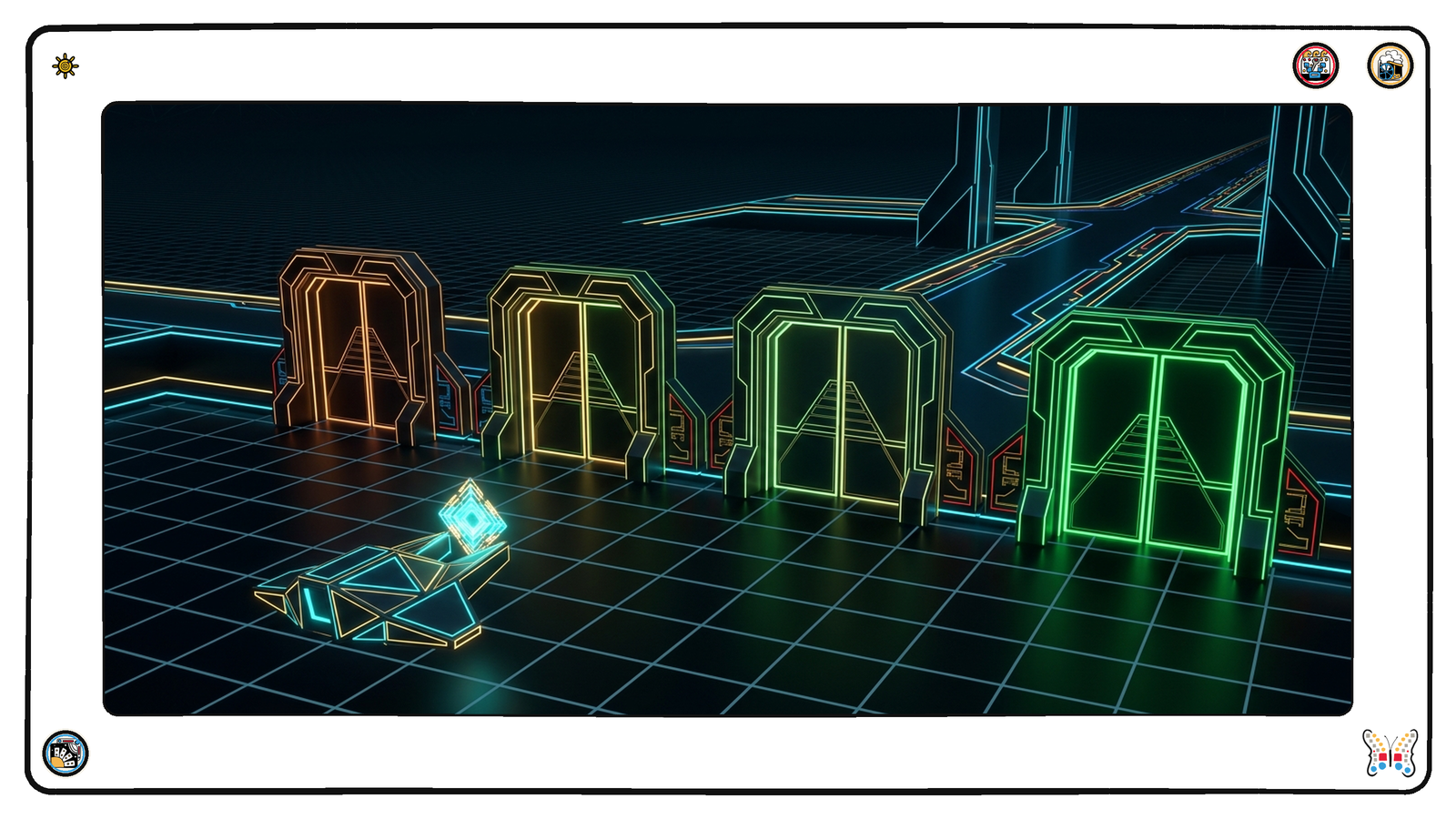
I wanted to see the other side of that work end to end, so I built it. This fall I stood up four small sites, each an API first and a website second, so I would have providers I control completely. On Thursday I pointed our own agent at all four with nobody in the room: it searched APIs.io, read each site’s onboarding descriptor, asked APIs.io to vouch for it, and presented that to each site. An agent found four APIs, and all four decided to trust it — five to seven seconds from first search to a trust decision, and 35 of 36 steps passing. That is Know Your Agent working outside a slide.

From My Desk: The Market, the Rules, and the Standards Nobody Ratified
- The Kin Score is getting a third dimension. For a year it has measured what a provider publishes and how ready that is for agents — both the provider looking at itself. Now it gets a Market layer, built from a deterministic chain: operation → tag → business capability → workflow → integration → market. It is the first part of the score that says what an API is worth to the businesses depending on it.
- Two new sections on APIs.io. Ninety-five companies publish their API design rules, and APIs.io lists them first. And six standards nobody ratified, measured against what the industry built — the S3 interface, the OpenAI API, CKAN, Ethereum JSON-RPC and others that became standards by being copied.
- From Stockholm. Bill Doerrfeld opened the summit with a definition of an agent, and I wrote about the one word in it that matters: driven or enabled.
- The numbers. 102 companies hiring for MCP, and the enterprises are ahead. Twenty-five thousand overlays, and none of them are yours yet.
- And the rest. fx is a coding agent that tells you which parts of MCP it does not do — I wish more tools did. The wires are crossed: slop for humans, structure for agents. And Commune has an API, and Substack does not — which is also how this week’s new subscribers got onto this list.
Across 12,552 posts, OpenAPI appeared in two titles. One of them was Scalar on generating it from NestJS. The other was a hands-on post about building an API reference from a single OpenAPI file. The specification layer stays quiet in the titles and load-bearing everywhere else.
I closed my talk in Stockholm on the same point I want to close on here. Decision models, payment rails and remote MCP servers are all, underneath, an API call with a contract — and this week each of them showed up with more than one contract for the same job. The hype is about what agents can do. The foundation is whether the thing they are calling says, in a way a machine can read, what it does, what it costs and who is allowed to call it.
See you next week.
🔌 APIs.io — Rules and Standards — Two new sections this week. Rules lists the companies that publish the API design rules their APIs are held to, as rulesets anyone can read and reuse. Standards measures the de facto standards — S3, the OpenAI API and the rest — against who actually implements them. If you are deciding how to design your next API, or what “compatible” should commit you to, start there.
Also on the shelf: Explicit Agent Boundaries
Every team I talk to has an agent editing their codebase and a folder of Markdown nobody reviews. That Markdown is the new configuration layer. Govern it like configuration.
